
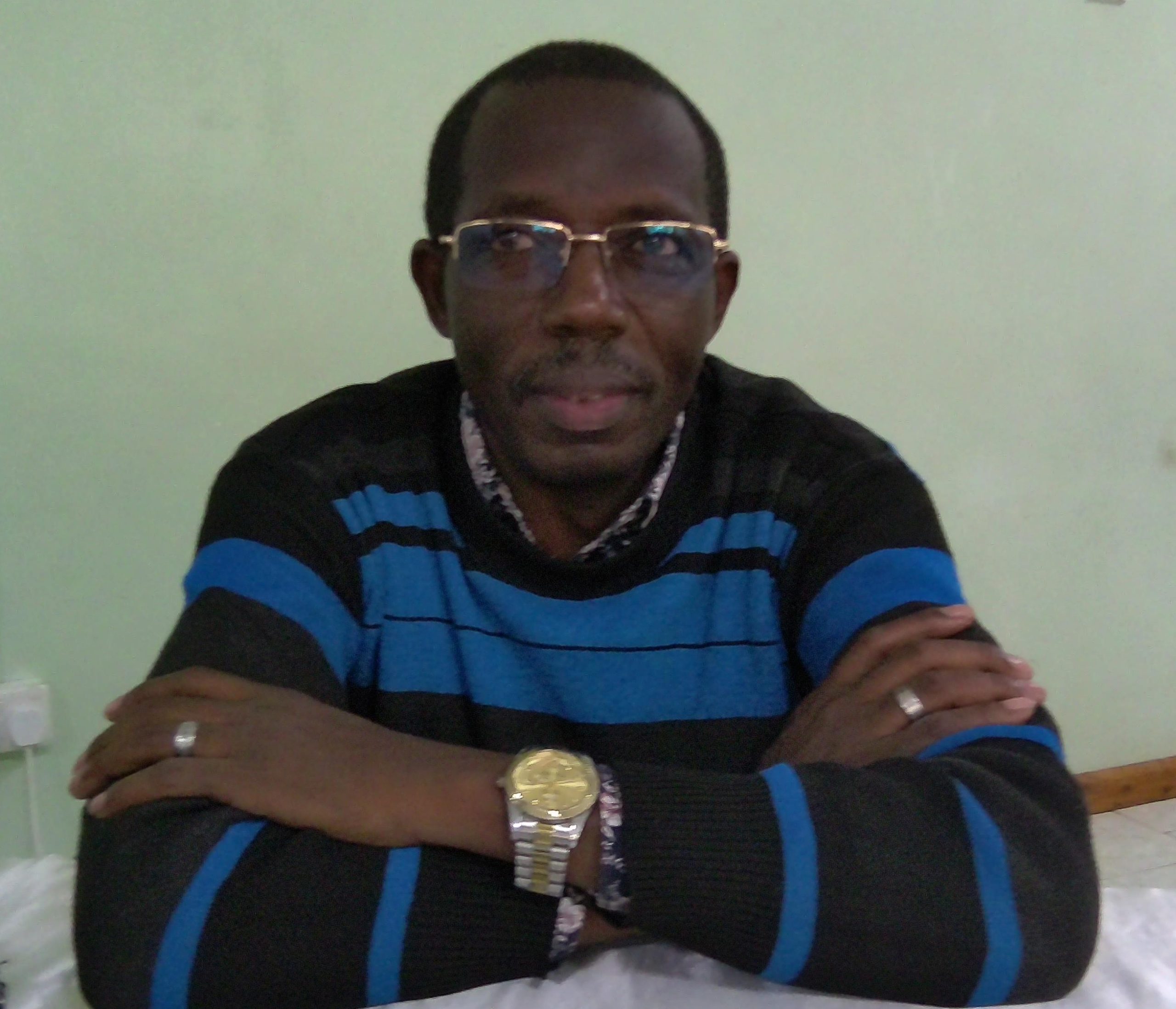
Dr Victor Lonu, lecturer of Biblical Hebrew at PAC University, Nairobi
Dr Lonu was scheduled to teach in his native home area in Dr Congo, but now has been prevented from going. He is now getting updates from friends:
“Children loose their parents, and relatives are afraid of hosting them due to the virus,” he told.
It was a rare moment in class, like a blend of history and of personal life united in minute when he shared this. I could only do a primitive video recording, but even so, his message is clear and emotionally very strong.
Fortunately, we had no confirmed cases in Kenya during the time, and my wife is not really concerned. Traveling home through airports was possible. In fact, the virus may not be serious threat to me. But in the death zone in Congo things are horrible.
I shared some of my research with my students. The Hebrew Bible is a collection of literary works created in a real cultural world in Ancient Israel. They had no modern medicine, but they had all their fair share of all the big Cs of modern society where “Crises crop up in Climate, Conflicts, COVID, Crops and Capital”.
This is the issue that I face in a new article that will be published by Phoenix Sheffield Press later this year in the Fall.
I was invited to give a paper to a conference in Kristianssand focusing on the theological answers to the COVID crisis by Dr. Markus Zehnder in 2021. It is only now in press, and for a while I thought that the topic had lost its newsworthiness.
But now we have Ebola. It will probably not turn into an epidemic. But what lies around the next corner?
In my pursuit of an answer, I first track the first explore the vocabulary on epidemics and illness in the Hebrew Bible. I select the case of the plague and trace in through instances during the stay in Egypt and the travels in desert from the stories in the Torah.
I then argue that the plague is part and parcel of the covenant curses in Leviticus 26 and Deuteronomy. They are list of all the common catastrophies that could hit in the ancient world and listed as examples of what can happen when God does not protect a disobedient people from all the crises.
This language helped the prophet Amos to want his people about consequences of war. Never take God as a given.
The plague language looms high in the last years of the Kingdom of Judah before the exile to Babylon. The prophets Jeremiah and Ezechiel could foretell disaster and warned the people against rejection of the only God who could save them in such times of immanent threat.
I use this case to reflect on the language of divine causation. We cannot know when the next crisis will hit, and what it will be. But the message is clear. Be ready to face your God!
Abstract
The term ‘crisis’ in its original meaning refers to the turning point for better or worse, for example in the culmination of an acute disease or fever. In this sense the COVID-19 pandemic could be seen not only as a disease that can be treated by vaccines but also as a test case for a society that has the potential for progress. This raises the question as to what we can learn from historical evidence on epidemic disease and whether plague and pestilence in the Hebrew Bible can be perceived as a crisis with potentially positive aspects. The topic of this study is how the distinct theological worldview of the Hebrew Bible influences the discourse on a crisis in three major test cases: the disasters in Egypt and during the desert wanderings, the outbreak of pestilence in Amos 4.9, and the role of pestilence in warnings of the exilic prophets Jeremiah and Ezekiel. The main point is that in the Hebrew Bible an effective discourse on disasters was readily available in the traditional language of the covenantal curses, and that its discourse on God’s direct and indirect involvement in epidemic disease may help us respond to similar crises even in our day and age.